Complete Guide to Portable Electric Stair Lifts
Outline and Why Portable Electric Stair Lifts Matter
Portable electric stair lifts sit at the crossroads of mobility, caregiving, and practical design, offering a way to move safely over steps when a fixed installation is too costly, too permanent, or simply impossible. For older adults, wheelchair users, caregivers, and facility managers, the right device can turn an awkward staircase from a daily obstacle into a manageable route. Yet the market is full of similar-looking machines with very different limits, controls, and safety systems. This guide helps you compare them with clarity before you buy, rent, or recommend one.
Stairs are ordinary until they are not. A short flight at a townhouse entrance, three exterior steps at a clinic, or a narrow basement stair can become a serious barrier when strength, balance, or endurance changes. Portable electric stair lifts address that barrier without requiring a rail fixed to the wall or major structural changes to the building. That flexibility is their biggest advantage. They can move between locations, serve more than one user, and support temporary or evolving mobility needs. This makes them relevant in homes, assisted living settings, rehabilitation environments, schools, hospitality venues, and emergency preparedness plans. However, flexibility does not mean simplicity. A portable device must match the user, the operator, the shape of the staircase, the total weight involved, and the rhythm of daily use.
This article is organized as a practical roadmap rather than a sales pitch. It starts with the main types of portable electric stair lifts and the way each system works in real conditions. It then moves into the features that matter most when safety, comfort, and reliability are on the line. After that, it explains how to choose a model based on use case, budget, and environment, including when renting may make more sense than buying. Finally, it closes with guidance on operation, maintenance, and a targeted conclusion for families, caregivers, and organizations. In short, the outline is:
• understanding the categories and terminology;
• comparing safety and technical specifications;
• matching a device to home, care, or travel needs;
• planning for upkeep, training, and long-term value.
By the end, you should be able to look past glossy brochures and ask the questions that actually matter.
Understanding the Main Types and How They Work
Before comparing brands, it helps to clarify the language. Many people use the phrase portable electric stair lift for several different products, but not all of them work the same way. A fixed residential stairlift usually runs on a rail permanently installed along the staircase. That is not the focus here. Portable electric stair lifts are mobile devices designed to climb stairs with electric assistance and usually with an attendant present. In the market, they are often grouped with stair-climbing wheelchairs, tracked stair chairs, evacuation chairs, and powered stair climbers. If the naming sounds messy, that is because it is. Manufacturers describe similar devices in different ways, so understanding the mechanism matters more than the label.
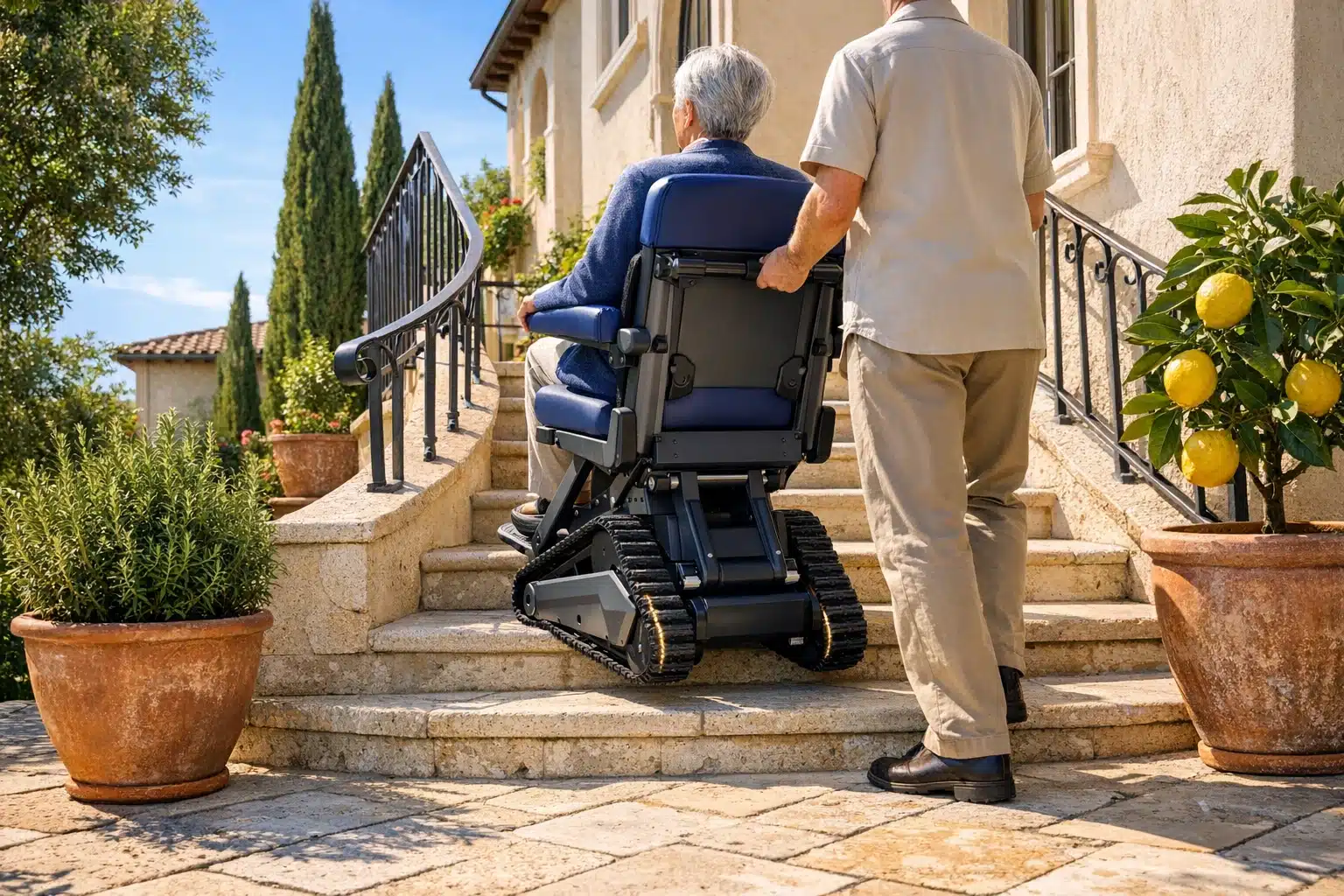
The first major category is the tracked stair chair. These units typically use rubber tracks to grip the stair edges while a seated passenger is carried up or down with motorized assistance. They are often chosen for indoor stairs, care settings, and repeated use because the ride can feel comparatively stable. The second category is the powered wheel-based stair climber, which uses a rotating wheel system or specialized climbing geometry to move up steps. Some versions are built for transporting goods, while others are adapted for people. A third category includes portable evacuation chairs with powered descent or ascent support, often used in facilities where safe emergency movement on stairs is a priority. Some advanced devices can integrate with a wheelchair, while others require transfer into a dedicated seat.
Each design has trade-offs. Tracked models often inspire confidence on straight staircases and can handle significant loads, but they may be bulkier and slower to reposition. Wheel-based systems can be more compact and easier to transport in a vehicle, yet they may feel different on certain stair profiles and may demand more operator skill. Transfer requirements also matter: if a user cannot easily shift from a wheelchair to a stair chair, a compatible wheelchair attachment or a different class of mobility solution may be necessary. When comparing types, focus on these practical variables:
• whether the device is operator-assisted or more user-controlled;
• whether it works on straight stairs only or can manage turns and landings;
• whether it requires a seated transfer;
• how it behaves on outdoor, uneven, or slippery surfaces;
• whether it is intended for daily access, occasional support, or evacuation only.
The best type is not the one with the longest feature sheet. It is the one that fits the staircase, the person, and the people responsible for using it safely.
Safety, Comfort, and Technical Features Worth Comparing
When people first compare portable electric stair lifts, they often look at price and maximum weight capacity. Those are important, but they are only the beginning. A device can have an impressive capacity on paper and still be a poor fit for a specific staircase or user profile. Safety depends on the interaction between load, balance, stair geometry, traction, braking, and operator control. Comfort matters too, because a nervous rider may tense up, shift unexpectedly, or refuse to use the device altogether. Many portable units weigh roughly 20 to 45 kilograms, while rated passenger capacities often fall somewhere between 120 and 180 kilograms, depending on design and market. Those broad ranges are useful for orientation, but only the manufacturer’s specification for the exact model should guide a final decision.
Start with staircase compatibility. Ask about minimum tread depth, maximum stair angle, landing clearance, and whether the device can manage narrow turns. Some units perform best on straight stairs with generous landings, while others are designed to pivot in tighter spaces. If outdoor use is likely, wheel and track materials, weather resistance, and grip on wet surfaces become especially relevant. Next comes control. A well-designed unit should offer smooth speed regulation, intuitive controls, emergency stop functions, and fail-safe braking or anti-roll-back systems. Seat belts, head support, armrests, footrests, and anti-tip features all contribute to safer transport. For users with limited trunk stability, the seating geometry can be just as important as the motor.
Battery system and portability are another pair of overlooked factors. A compact device may be easier to store in a car trunk or closet, but if it requires frequent charging or loses performance under repeated use, convenience quickly fades. Some manufacturers express endurance in flights of stairs or total steps per charge rather than hours, which is often more meaningful in real use. Training also deserves serious attention. Even the best machine is not self-explanatory under pressure. A smart checklist includes:
• real stair testing on the intended site;
• operator training for ascent, descent, and transfer techniques;
• verification of battery status indicators and charging routine;
• review of cleaning, inspection, and maintenance intervals;
• confirmation of warranty terms, spare parts access, and service response times.
Think of safety features as a complete system, not a set of isolated specifications. Confidence on stairs is built from many small design choices working together.
How to Choose the Right Model for Home Use, Care Work, Travel, and Budget
Choosing a portable electric stair lift is less like buying a household gadget and more like matching a tool to a living situation. The right answer for a family home may be completely wrong for a care agency, hotel, clinic, or public venue. Start by asking who will use the device, who will operate it, and how often the staircase challenge appears. A family supporting one older adult in a two-story home may prioritize comfort, a manageable transfer, quiet operation, and compact storage. A professional caregiver may need faster setup, predictable handling over repeated visits, and a model sturdy enough for different body types. A facility manager may focus on compliance, staff training, emergency use, and long-term service contracts.
Budget matters, but headline price alone can be misleading. Portable electric stair lifts can range from several thousand to much more depending on category, load rating, battery system, construction quality, and after-sales support. A lower-cost unit may be enough for occasional use in a simple environment, but frequent use often rewards investment in stronger materials, better ergonomics, and dependable servicing. Renting can make sense after surgery, during rehabilitation, or while waiting for a permanent accessibility decision. In contrast, buying may be more economical for ongoing daily use. The total cost of ownership includes more than the purchase itself:
• delivery and on-site demonstration;
• staff or family training;
• spare batteries or chargers;
• scheduled maintenance and replacement parts;
• downtime risk if service is slow or remote.
A slightly more expensive model with better local support can be the cheaper option over time.
It also helps to compare by scenario. For home use, measure every relevant space, including landings, doorway widths, and storage location. For travel or multi-site work, check folded dimensions, lifting weight, and whether one person can load it into a vehicle safely. For clinical or institutional use, request documentation, cleaning guidance, and a demonstration under realistic conditions. Do not rely only on showroom impressions. Ask targeted questions:
• Can the device be tested on our exact stairs?
• What happens if the battery depletes mid-day?
• How easy is it to secure a user with limited mobility or anxiety?
• Are replacement parts stocked locally?
• Is this model designed for regular transport of people, or mainly for emergency movement?
The strongest buying decision comes from matching technical facts to everyday routine. If a device fits beautifully on paper but disrupts how people actually move, store, charge, and assist, it is not the right fit.
Everyday Operation, Maintenance, and Final Advice for Families and Professionals
Once a portable electric stair lift is in service, everyday habits determine whether it remains a trusted mobility aid or turns into an underused machine gathering dust in a corner. Good operation starts before the first step is climbed. The staircase should be checked for loose rugs, clutter, moisture, damaged edges, and poor lighting. The device should be inspected for battery charge, clean contact points, secure belts, stable footrests, and any unusual sounds or resistance. If a transfer is required, the environment should be calm and unhurried. A staircase is not the place for improvisation. The most reliable routine is a short pre-use sequence that everyone involved understands and repeats consistently.
Maintenance is usually straightforward, but it should never be casual. Follow the manufacturer’s schedule for cleaning, lubrication if applicable, battery charging, and periodic inspection. Batteries tend to last longer when they are charged according to the recommended cycle rather than left fully drained for long periods. Tracks, wheels, and moving joints should be kept free of dust and debris, especially if the device is used outdoors or transported in a vehicle. Professional servicing is especially important for units used by care teams or facilities, where wear accumulates faster and multiple operators handle the equipment. Keep a simple record of checks, service dates, and any incidents, even minor ones. That small habit can reveal patterns before they become safety issues.
For the target audience, the final takeaway is clear. Families should prioritize fit, ease of transfer, and local support over flashy extras. Caregivers should value repeatable handling, realistic training, and predictable maintenance just as much as motor power. Organizations should think in systems: staff instruction, battery management, documentation, and device availability all matter. A portable electric stair lift can be a practical bridge between limitation and independence, but only when chosen with care and used with discipline. The smartest path is to arrange a real-world trial, compare at least a few models, and involve the actual user whenever possible. On paper, many devices look similar. On an actual staircase, the right one feels steadier, simpler, and easier to trust. That difference is where smart buying turns into genuine day-to-day value.