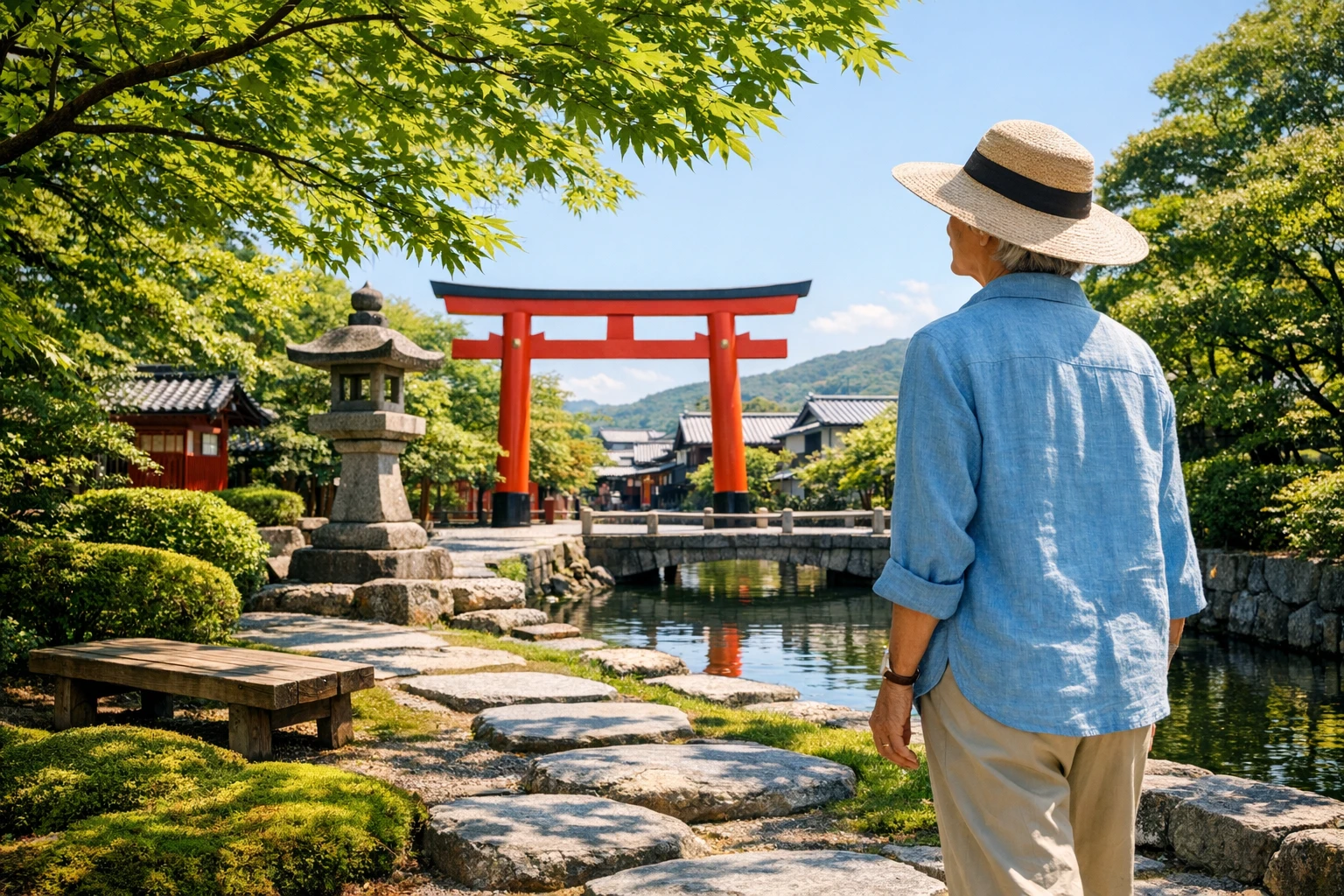
Golden Years, New Horizons: The Best Destinations for Retirees Traveling Solo
Retirement can open a wider map, especially for people who want freedom without waiting for a group itinerary to align. Solo travel in later life is no longer unusual; it is a practical, rewarding way to explore at a gentler pace, meet new people, and shape each day around personal interests. The best destinations combine safety, comfort, culture, and manageable costs. This guide outlines where independent retirees can travel with confidence and why each place deserves attention.
Outline: • What makes a destination ideal for a solo retiree • The most approachable bases in Europe • Safe, efficient, and culturally rich choices in Asia • Warm, welcoming destinations in the Americas • How to choose the right place for your budget, pace, and personality
What Solo Retirees Should Look For Before Choosing a Destination
Not every beautiful place is comfortable for a solo retiree, and not every famous city is enjoyable once the novelty wears off. The most successful trips usually depend on a handful of practical details: ease of movement, personal safety, healthcare access, clear transportation, and a social atmosphere that feels open rather than overwhelming. Many retirees also want something less measurable but equally important: a place where the day does not feel rushed. That can mean a walkable old town, a reliable train network, benches in shaded squares, or simply the chance to linger over coffee without feeling out of step.
A wider lifestyle change helps explain why solo retirement travel is growing. Чудили ли сте се дали диванът е незаменим? Днес дизайнът се променя и той губи популярност. Всекидневната става по-гъвкава, стилна и социална. In a similar way, retirement itself is becoming more flexible. People are less interested in one fixed routine and more interested in designing life around curiosity, health, and meaningful experience. Travel fits naturally into that shift. A retiree traveling alone can set a slower schedule, stay longer in one place, and avoid the stress that often comes with group compromises.
When comparing destinations, it helps to use a simple checklist: • Is public transport easy to understand? • Are sidewalks, crossings, and stations senior-friendly? • Is there a hospital or clinic nearby? • Can you manage daily life in English, or are translation tools enough? • Does the destination offer both quiet and connection?
Budget matters, but value matters more. Some places are affordable on paper yet tiring in practice because they require long transfers, constant bargaining, or heavy dependence on taxis. Others may cost a bit more but reward travelers with efficiency, safety, and comfort. Climate also deserves attention. A place with excellent museums and food can still feel difficult if summer heat is intense or hills are steep. Seasonality matters just as much as price. A destination that feels perfect in April may feel crowded, humid, or expensive in August.
For many solo retirees, the sweet spot is a destination that combines good infrastructure with room for spontaneity. The best travel days often begin without a strict plan: a morning market, an afternoon museum, a conversation in a café, and a sunset stroll by the water. That rhythm is easier to enjoy in places built for walking, resting, and observing. Before choosing a destination, think less about famous highlights and more about how daily life will feel from breakfast to bedtime. That is where comfort turns into confidence, and confidence turns a trip into a deeply satisfying new chapter.
Europe for Ease and Charm: Portugal, Spain, and Malta
Europe remains one of the strongest regions for solo retirees because it offers dense culture, reliable infrastructure, and a wide range of lifestyles within relatively short distances. For travelers who want a gentle entry into solo exploration, Portugal, Spain, and Malta stand out. They combine mild climates, established tourism systems, and enough familiarity to reduce stress without making the experience feel bland. English is widely understood in many visitor-facing settings, and public transport is usually easier than in car-dependent destinations.
Portugal is often a strong first choice. Lisbon has hills, trams, river views, and serious charm, but Porto can feel more compact and relaxed. Smaller cities such as Coimbra or Faro may suit travelers who want an easier pace. Portugal is well known for hospitality, seafood, tiled architecture, and cafés that invite lingering rather than rushing. Rail and intercity buses connect much of the country, and compared with many Western European capitals, accommodation and dining can still be reasonable outside peak season. The atmosphere often feels calm instead of performative, which matters when you are traveling alone and paying attention to how a place actually lives.
Spain works especially well for retirees who love urban energy but want it in digestible form. Madrid and Barcelona are rewarding, yet cities like Valencia, Málaga, Seville, and San Sebastián may feel more manageable. Spain offers outstanding regional variety: seaside promenades, historic centers, late dinners, music, and lively plazas that make solo dining feel normal rather than awkward. A sentence from another context surprisingly fits here: Диванът вече не е центърът у дома. Животът ни изисква повече функции – работа, спорт и почивка. Големите мебели често заемат излишно място. Retirement travel now works the same way; people want destinations that support many moods in one day, from quiet mornings to cultural afternoons to sociable evenings.
Malta is smaller but highly practical. Its size makes logistics simpler, English is an official language, and the island mixes sunshine, history, and coastal scenery in a compact package. Valletta and nearby towns offer baroque architecture, sea views, and short travel times. While buses can be crowded in busy periods, the overall scale helps reduce decision fatigue. Malta may not have the depth of Spain or Portugal for a very long stay, yet it can be an excellent starting point for first-time solo retirees who want somewhere readable, warm, and full of atmosphere.
For travelers considering Europe, the main differences are easy to summarize: • Portugal often feels relaxed and good value • Spain offers the broadest range of city experiences • Malta provides convenience and language comfort in a compact setting
None of these places is perfect for every traveler, but each gives solo retirees a realistic mix of culture, safety, comfort, and pleasure. In Europe, that combination is hard to beat.
Asia for Safety, Precision, and Discovery: Japan, Taiwan, and Singapore
Some retirees hesitate before choosing Asia for solo travel, assuming it will be too unfamiliar, too fast, or too complicated. In reality, several destinations in the region are exceptionally well suited to independent older travelers. Japan, Taiwan, and Singapore stand out for different reasons, yet they share traits that matter: low crime, organized transit, excellent food, and environments where daily routines can become surprisingly smooth after a short adjustment period. For retirees who enjoy learning as they travel, these destinations can be deeply rewarding without being chaotic.
Japan is often the gold standard for travelers who value reliability. Trains are famously punctual, streets are clean, service is respectful, and cities offer clear structure even when they are large. Tokyo may sound intimidating, yet many neighborhoods feel orderly rather than frantic. Kyoto offers history, gardens, and temples, while smaller cities like Kanazawa or Fukuoka can be easier for longer stays. Japan is not always cheap, especially in major hubs, but it offers high value through efficiency and ease. When transport works, signage is clear, and people take public behavior seriously, solo travel becomes less tiring.
A lifestyle observation from home design fits this travel style better than one might expect: Хората търсят уникалност и лекота. Вместо стандартен диван, комбинират кресла, пуфове и кушетки. Така създават по-лично и уютно пространство. Solo retirees often build trips the same way in Japan. Instead of one rushed grand tour, they mix neighborhoods, day trips, gardens, local trains, and quiet guesthouses. The result feels personal rather than generic. A temple in the morning, a department-store food hall at lunch, a museum in the afternoon, and a riverside walk at dusk can create a day that feels rich without ever becoming exhausting.
Taiwan offers many of Japan’s strengths with a different rhythm and often a gentler price point. Taipei is one of Asia’s most approachable capitals for newcomers: the metro is clean, signage is useful, and food ranges from simple noodle shops to refined tea houses. The island is also compact, which makes short rail journeys realistic for retirees who do not want constant packing and unpacking. Taiwan feels warm in more than one sense: people are often welcoming, and the culture of night markets, parks, and neighborhood cafés makes solo wandering enjoyable.
Singapore, by contrast, is polished, highly organized, and especially easy for English-speaking travelers. It is one of the simplest places in Asia to navigate independently, though usually one of the pricier ones. Still, it offers outstanding public transport, strong healthcare, and a comfortable introduction to the region. For some retirees, a week in Singapore followed by time in Taiwan or Japan creates an ideal balance between familiarity and discovery.
If Europe feels like a long conversation, much of Asia feels like a finely tuned instrument. For solo retirees who appreciate clarity, courtesy, and cultural depth, these destinations can turn uncertainty into delight.
Warm Weather and Easy Community: Mexico, Costa Rica, and Uruguay
Not every solo retiree wants cathedrals, metro maps, or cool spring weather. Many are looking for warmth, slower days, fresh food, and a stronger sense of informal community. In the Americas, Mexico, Costa Rica, and Uruguay deserve serious attention. They offer different balances of affordability, comfort, and atmosphere, but all three can appeal to travelers who want sunlight and sociability without sacrificing practicality. The right choice depends on whether you value city life, beach access, nature, or long-stay livability.
Mexico is often the most versatile option. It contains everything from colonial cities to beach towns to major cultural capitals. For solo retirees, places such as Mérida, Oaxaca, San Miguel de Allende, and Puerto Vallarta come up again and again because they combine strong local identity with traveler-friendly services. Food culture is a major advantage; affordable meals, markets, and cafés make daily life enjoyable even on quiet days. There are also established expatriate and long-stay communities in several regions, which can reduce loneliness for first-time solo travelers. That said, Mexico is not one-size-fits-all. Safety varies significantly by area, so city-level research matters more than country-level assumptions.
Costa Rica attracts retirees who want nature within easy reach. The country is famous for biodiversity, national parks, and a lifestyle built around outdoor living. For solo travelers, the appeal lies in its manageable scale, friendly reputation, and range of environments, from beach towns to mountain areas with cooler air. Costs can be higher than some expect, especially in popular coastal zones, but many travelers accept that trade-off for scenery, fresh produce, and a relaxed social mood. There is an underlying lesson here that connects daily life and travel: Малките жилища също налагат промяна. Компактните мебели правят стаята по-просторна. Те са лесни за местене и по-практични. Compact destinations often work in the same way. When distances are shorter and choices are clearer, travel feels lighter and more enjoyable.
Uruguay is less discussed, which is part of its appeal. Montevideo offers a calm capital city with long waterfront promenades, while Punta del Este and Colonia del Sacramento provide very different coastal and historic atmospheres. Uruguay is often praised for stability, civic order, and a relatively easygoing lifestyle. It may not be the cheapest destination in South America, but many retirees find the trade worthwhile because daily life can feel steady and predictable. That matters when you are traveling alone and want a destination that rewards consistency rather than constant improvisation.
A simple comparison may help: • Choose Mexico for variety, culture, and food • Choose Costa Rica for greenery, wildlife, and outdoor living • Choose Uruguay for calm urban life and a measured pace
These are not flashy choices for people chasing novelty at all costs. They are better than that: they are places where solo retirees can feel comfortably present, which is often the real luxury.
Conclusion: Matching the Destination to the Life You Want Now
The best destination for a solo retiree is not automatically the cheapest, the trendiest, or the most photographed. It is the place that fits your energy, interests, mobility, budget, and appetite for novelty. Some travelers want museum cities and train stations that run like clockwork. Others want sea air, a familiar café, and enough community to feel connected without needing a packed social calendar. The freedom of solo retirement travel is that both approaches are valid, and both can be deeply satisfying when chosen deliberately.
One of the smartest strategies is to test a place before committing to a long stay. Spend ten days instead of three. Rent an apartment instead of booking a hotel for every night. Shop for groceries, ride local buses, sit in parks, and notice how your body feels after a typical day. These details reveal more than highlight lists ever can. New destinations should not only impress you; they should support you.
A final image from interior design captures this well: Новите решения насърчават общуването. Подредбата с кресла създава уют за разговори. Домът става по-функционален, удобен и модерен. Good travel planning works the same way. The goal is not to force yourself into an old template of what retirement should look like. The goal is to create a life that invites movement, conversation, and comfort in equal measure. Solo travel does not have to mean isolation. In the right place, it often leads to more meaningful interaction because you notice more, ask more, and remain open to small invitations.
Before you book, make a short personal checklist: • How much walking feels enjoyable each day? • Do you prefer one base or frequent movement? • Is access to English important? • Would you rather join activities locally or keep to yourself? • How important are healthcare proximity and climate comfort?
For retirees considering a first independent journey, start with the destination that makes logistics feel simplest, not the one that sounds most dramatic. Confidence grows quickly when daily life is manageable. Portugal, Spain, and Malta are strong choices for European ease. Japan, Taiwan, and Singapore reward travelers who value structure and cultural depth. Mexico, Costa Rica, and Uruguay shine for warmth, livability, and community. Wherever you begin, the real destination is not just another country. It is a more self-directed version of retirement, shaped by curiosity, steadiness, and the quiet thrill of discovering that your next chapter can still surprise you.